
Mixed Doubles at the Grand Slams: The New Format and Schedule After the Reform
For most of its history, mixed doubles was the quiet corner of a Grand Slam. It ran in the background, threaded through the middle weekend, contested largely by doubles specialists while the cameras and the crowds chased the singles stars. Then the US Open tore the whole thing up, and the rest of the tennis world has been arguing about it ever since. The reform has changed not only how mixed doubles is played, but when it is played, who plays it, and what the event is actually for. To understand the new landscape, you have to look at all three things at once: the schedule, the format, and the fight over both.
Start with the schedule, because that is the most radical change of all. Traditionally the mixed event lived inside the tournament, overlapping with singles and the other doubles draws. The US Open pulled it out entirely and planted it in the so-called Fan Week, the stretch of exhibition tennis that precedes the main draw. The event now runs across two days before a single competitive singles ball has been struck. The logic is straightforward and entirely commercial: by holding it before the main draw begins, the tournament frees up the biggest singles names to take part without fear of burning energy they will need later. Move the event off the critical path, and suddenly a world number one has no reason to say no.
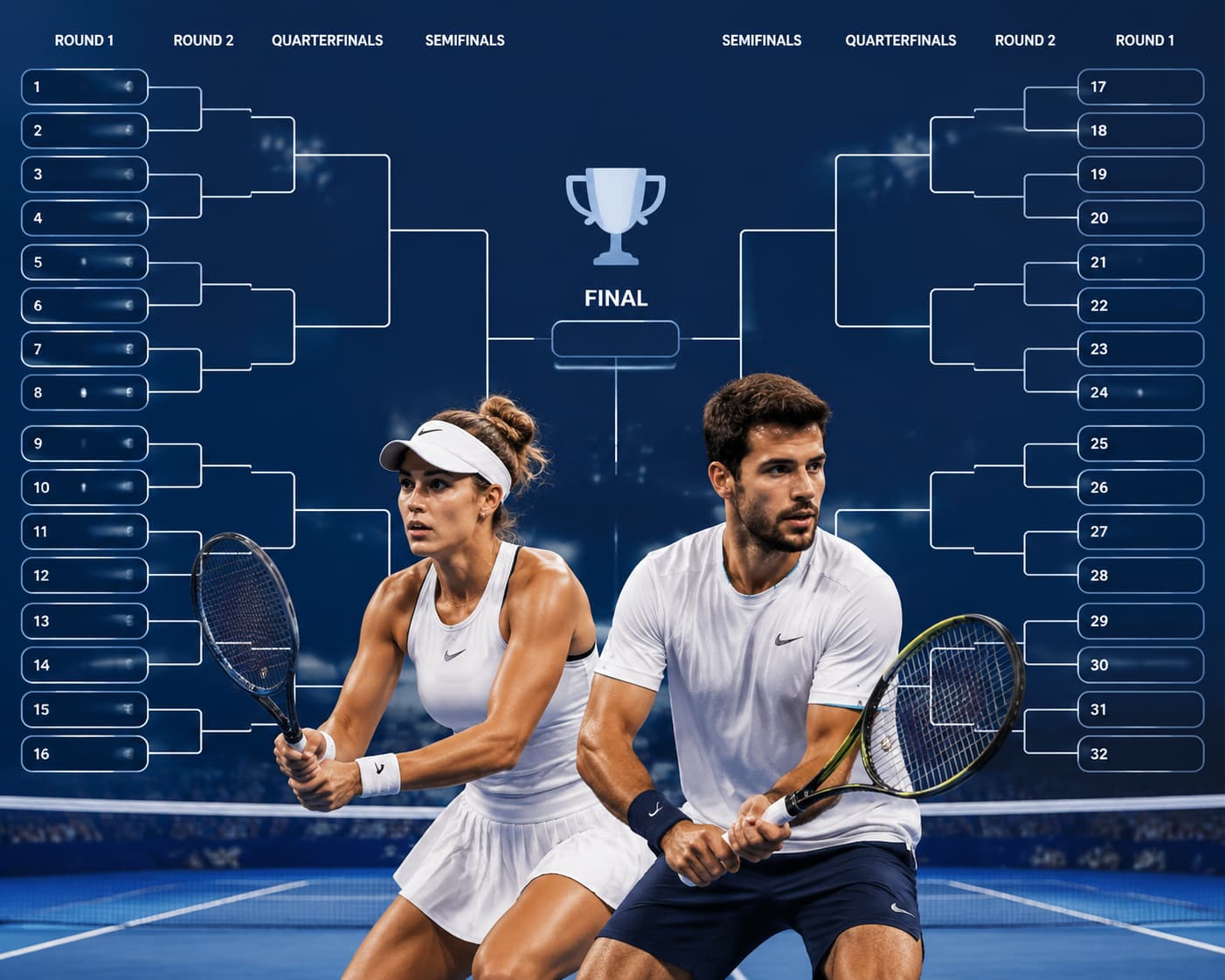
The format was compressed just as aggressively. The field was cut from thirty-two teams to sixteen. Eight enter directly on the strength of their combined singles ranking, and the remaining eight arrive as wild cards. The matches themselves are barely recognizable to a traditionalist. Every match before the final is best of three sets, but a set is the first to four games rather than six, scoring is no-ad, so the receiver decides the game at deuce, and a ten-point match tiebreak replaces the entire third set. The final stretches a little, sets to six games, but keeps the same no-ad scoring and the tiebreak-for-a-third-set structure. The whole point is speed. A match that once could run well over an hour now fits into a tidy, broadcast-friendly window, and a champion can be crowned across two evenings.
The on-court product, by most accounts, worked. The revamped lineup read like a fantasy bracket: Carlos Alcaraz with Emma Raducanu, Jannik Sinner with a partner drawn from the singles elite, Naomi Osaka, Novak Djokovic, Venus Williams, and more besides, all suddenly willing to show up for an event they had ignored for years. Crowds were large, the tennis was loose and entertaining, and even skeptics among the players came around once they felt the atmosphere. One leading man dismissed it early on as “a bit of an exhibition,” only to be corrected on the spot by his own partner and then, by his own admission, to change his mind entirely once he was deep in the draw and the prize money and pride were real. Tellingly, the title did not go to a glamour singles pairing at all, but to a pair of genuine doubles specialists who had won the event under the old format the year before, a result that quietly undercut the idea that the discipline is just a playground for singles celebrities.
That result points straight at the controversy, which is real and unresolved. The reform’s harshest critics are exactly the people the new format pushes aside: the doubles professionals. For them, the math is brutal. A pair can win two mixed Grand Slam titles in a single season and still find themselves frozen out of the new draw, because entry now hinges on singles ranking rather than doubles achievement. Reigning champions called the schedule change a “profound injustice.” Others framed it as a lack of respect for the history and traditions of the majors, and as the slow erasure of a livelihood. There is a fairness argument buried in the celebration: an event redesigned to attract stars is, by definition, an event that has decided its own specialists are not the draw.
There is also the money, which nobody pretends to ignore. The revamped event carries a purse that dwarfs what the other majors pay their mixed champions, with a winners’ share running into seven figures and meaningful sums on offer just for losing in the first round. That gap is the clearest signal of intent. The US Open is not tinkering; it is betting that mixed doubles can be a marquee spectacle in its own right, and it is paying stars accordingly.
What happens next across the calendar is the open question. So far the other three majors have not copied the model. Tennis Australia stated plainly that it has no plans to change its current mixed format, defending the event as one of the rare arenas in world sport where men and women compete alongside and against each other. Wimbledon, for its part, still slots mixed doubles into the body of the tournament in the traditional way. Instead of imitating the reform, the Australian Open has gone sideways, cooking up a separate novelty event that pits professionals against amateurs for a large prize, a sign that everyone now feels pressure to manufacture buzz, even if they disagree on how.
So the reform, for now, is a US Open experiment rather than a Grand Slam consensus. It has produced exactly what its designers wanted: stars, crowds, headlines, and money. It has also produced a genuine grievance among the players who built the event over decades and are now told they no longer fit it. Whether the format spreads or stays a New York curiosity will decide whether mixed doubles has been revived or simply repackaged.